





Road Safety
Dear Parents and Carers,
At Townley Grammar, the safety of our students is our highest priority. Recently, a number of serious concerns have been raised regarding road safety around the school. We feel these behaviours are putting students at risk and we therefore ask you to read this message carefully and discuss it with your children.
Pedestrian Safety & Distractions
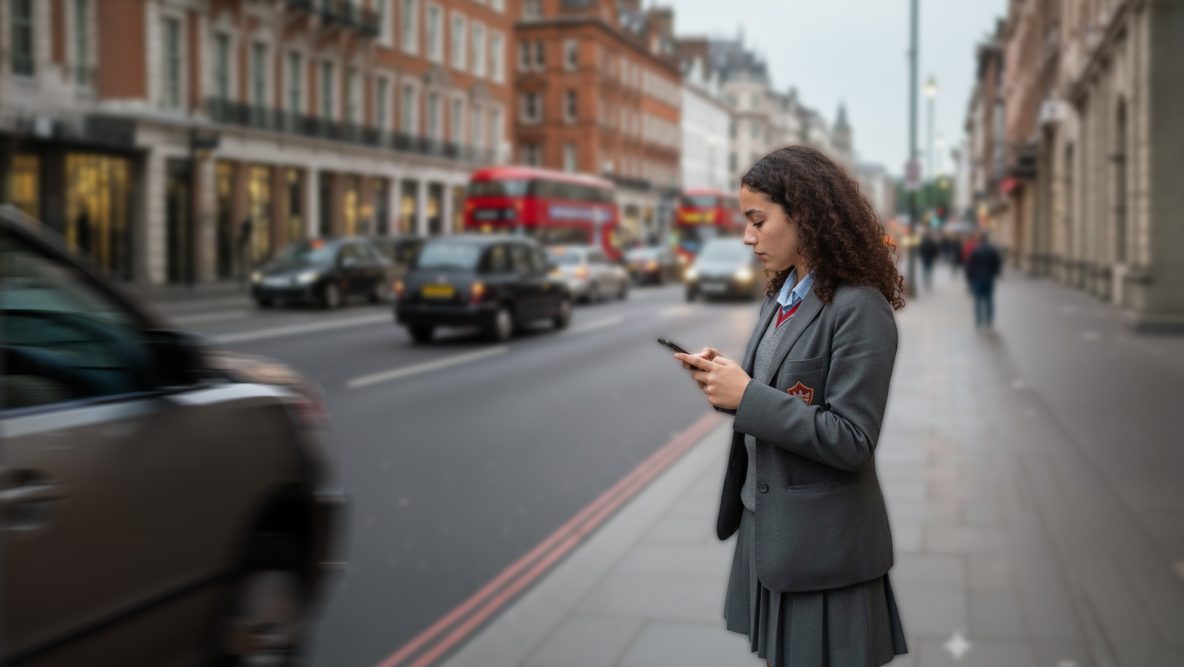
It is equally vital that our students remain vigilant. We are seeing an increase in students crossing roads while looking at their phones or wearing earphones. Please remind your child that if they are listening to music, they will be unable to hear approaching traffic or emergency sirens. We ask that families discuss the importance of putting phones away and removing earphones whenever they are crossing a road.
Please remind your child that they should not try to cross a road between parked cars; drivers cannot see them and vehicles may begin to move unexpectedly. If there is no other place to cross, they should:
- Always cross the road at pedestrian crossings
- Choose a space with a significant gap between two cars.
- Check for signs that a car is about to move (drivers in the seat, lights on or the sound of engines).
- Follow the Green Cross Code.
Addressing Dangerous Parking
We have observed a frequent and dangerous number of vehicles pulling up on the curb over the double yellow lines on Townley Road. This is occurring daily on an already busy road where students are constantly crossing.
When cars park on double yellow lines or mount the curb, they severely obstruct the line of sight for both students and other motorists. We ask that all parents and carers use only designated parking areas, even if it means a short walk to the school gates.
The Green Cross Code & Parked Cars
The Green Cross Code itself is a short step-by-step procedure designed to enable pedestrians to cross UK roads safely:
1. Think
Find a safe place to cross the road such as a pedestrian crossing, an underpass or a footbridge.
2. Stop
Just before you get to the kerb, stop.
Stand on the pavement near the kerb and make sure that you can see the traffic. DO NOT step on to the road.
3. Look
Look all around you for traffic. Make sure that you listen carefully for traffic that you can’t see.
Check to your right hand side first, then check to your left and then to your right again before you cross.
Beware that some roads ( named one-way streets) have all of the traffic moving in the same direction.
Watch out for bicycles or people on e-scooters. You often don’t hear them but they travel very fast.
4. Wait
If traffic is coming, let it pass.
If you are waiting at a crossing then wait until the cars have stopped or the green man shows, before you cross.
If you are not at a crossing wait until it is safe to cross.
Once the traffic has passed look around again and listen.
5. Look and listen again
When it is safe and there is no traffic, walk straight across the road.
Keep looking and listening while you cross the road. Watch out for cyclists, motorcyclists, e-scooters and horse riders.
Always walk straight across the road, don't walk diagonally. Never run across the road in case you fall over and you might not get up in time.
6. Arrive alive
Look and keep looking while you cross the road.
The Statistics
- The Direct Line Group report that 1,200 children are injured every month in traffic related collisions within 500m of a school.
- In urban areas, a high percentage of child pedestrian accidents occur because a child’s view was masked by a parked vehicle.
We appreciate your cooperation in keeping our school community safe. By following these rules, we can ensure that every student arrives at school and returns home safely.
Kind regards,
Miss S Totty
Interim Headteacher